How to Keep Pipes From Freezing in Lubbock
A few simple steps before a hard freeze protect most pipes, and this guide explains each one.
How to keep pipes from freezing in four simple steps
Frozen pipes during cold snaps are one of the most common reasons Lubbock homeowners call a plumber. Ice takes up more space than water, pressure builds in the trapped section and the pipe cracks, usually where it runs through a cold part of the house. Keeping pipes from freezing mostly means keeping those cold spots warm and keeping the water moving.
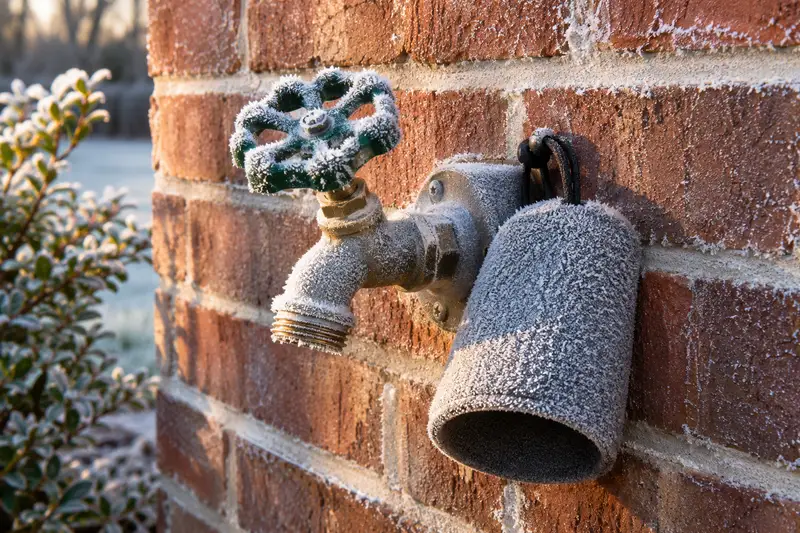
Protect outdoor faucets
Disconnect every hose, cover each outdoor faucet and drain any outdoor pipes you can.
Keep the heat on
Even while you are away, and even in rooms nobody uses.
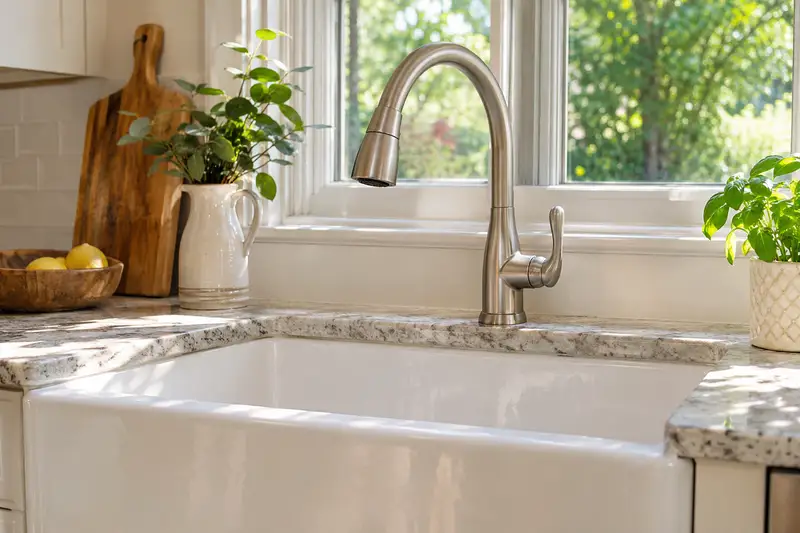
Let a faucet drip
On the coldest nights, a slow drip keeps water moving through exposed pipes.
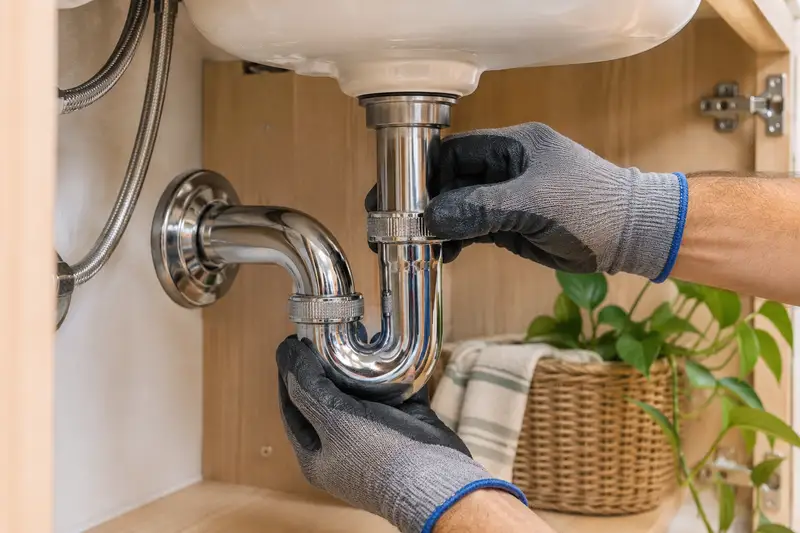
Open sink cabinets
Open the cabinets under sinks on outside walls so warm air reaches the pipes.
How to prepare your pipes in the fall
One afternoon in the fall prevents most freeze damage
Disconnect every garden hose
Water trapped in a connected hose backs up into the faucet and can crack the pipe inside the wall.
Cover the outdoor faucets
An insulated foam cover over each faucet helps keep it from freezing.
Close the outdoor faucet valve
If an indoor valve supplies your outdoor faucets, close it and open the outdoor faucet so it drains.
Winterize the sprinklers
Close the sprinkler supply and drain the system as the manufacturer recommends.
Test the main water valve
Turn the handle now. If it moves easily in October, you can close it quickly in January.
Which pipes are most likely to freeze
Outside walls
Water pipes inside a wall that faces the wind.
Unheated garages
Pipes along a garage wall that gets almost as cold as outside.
Attics
Pipes running through or above the ceiling insulation.
Under sinks
Kitchen or bathroom cabinets built against an outside wall.
Outdoor faucets
Especially ones with a hose still connected.
Sprinkler pipes
Shallow sprinkler lines and the backflow preventer.
A pipe that has frozen once often freezes again in the same spot, so give it extra attention every winter.
What to do on very cold nights
- Choose a faucet on an outside wall and let both the hot and cold water drip slowly.
- Open every sink cabinet on an outside wall.
- Keep the garage door closed if water pipes run along the garage walls.
- Keep the thermostat at the same setting overnight instead of letting the house cool down.
- Move cleaning products to a high shelf if children or pets could reach the open cabinets.
A dripping faucet uses a few gallons of water, while a cracked pipe can leak hundreds of gallons onto the floor. These are the nights when the steps on this page matter most.
How to protect your pipes when you travel in winter
Much of the worst freeze damage happens while nobody is home. A pipe that cracks on the first night of a trip can leak until you get back.
Leave the heat running
Set the thermostat to a steady, moderate temperature. Never turn it off.
Turn off the washing machine valves
Close the laundry valves, or the main water valve for a long trip.
Open the cabinets on outside walls
Do this whenever a freeze is forecast.
Ask someone to check the house
Ask a neighbor to look in, and show them where the main water valve is.
Add smart water alarms
Leak sensors that alert your phone, placed near the water heater and the laundry.
What to do if a pipe freezes
If no water comes out of a faucet on a very cold morning, the pipe has probably frozen. Stay calm and thaw it slowly.
Open the faucet
This gives the melting water somewhere to go and lets pressure escape.
Find the frozen section
It is usually in an outside wall, under a sink or in the garage.
Warm it gently
Use a hair dryer, or a space heater placed a safe distance away, working from the faucet toward the frozen section.
Never use a flame
Torches and lighters can set the wood inside the wall on fire.
Stay close while it thaws
If water starts spraying, close the main water valve straight away.
If the frozen pipe is behind drywall or in a crawlspace you cannot reach, call a plumber, who can thaw it safely and check for cracks.
Why frozen pipes crack
You might expect a pipe to crack right where the ice is, but the crack usually appears a little way from it. The ice forms a plug, and as more water freezes, pressure builds in the section between the plug and the closed faucet.
That is why an open faucet helps. It gives the trapped water a way out and keeps the pressure from rising higher than the pipe can handle.
Winter pipe checklist for each part of the house
| Area | Before the cold weather | On very cold nights |
|---|---|---|
| Outdoors | Disconnect hoses, cover faucets and close the outdoor faucet valve | Check that the faucet covers are still in place |
| Garage | Wrap exposed pipes with foam insulation | Keep the garage door closed |
| Kitchen | Clear out the cabinet under the sink | Open the cabinet and let the faucet drip |
| Bathrooms | Note any sink on an outside wall | Open the cabinet doors |
| Laundry | Check the washing machine hoses | Keep the room heated |
| Water heater closet | Find the cold water valve | Leave the water heater running normally |
What to check after a freeze
When the temperature rises again, a quick check around the house finds damage that may be hidden.
- Turn on each outdoor faucet and check the wall behind it for moisture.
- Look under sinks on outside walls for drips or water stains.
- Check the garage walls wherever water pipes run.
- Watch the water meter with all the water off to find a hidden leak.
- Check the sprinkler system for cracked pipes before turning it back on.
If a pipe did crack, our page on burst pipe repair explains what happens next.
Permanent fixes for a pipe that keeps freezing
Simple fixes you can do
- Foam insulation on exposed pipes.
- Caulk or foam to seal drafts that reach the pipe.
- An insulated cover on every outdoor faucet.
Permanent fixes by a plumber
- Moving the pipe away from an outside wall.
- Adding an indoor shutoff valve for the outdoor faucets.
- Installing frost free outdoor faucets.
A plumber can tell you which fix suits the pipe that keeps freezing.
Frozen pipe questions
How cold does it have to get before pipes freeze?
There is no single temperature. How exposed the pipe is and how long the cold lasts matter most, so a long spell of very cold weather is the real danger, especially for pipes in garages and outside walls.
Does letting a faucet drip really help?
Yes. Moving water is less likely to freeze, and an open faucet lets pressure escape if ice forms anyway.
Should I let the hot or the cold water drip?
On a single handle faucet, let a little of both drip so both water lines are protected.
Can I turn the heat off while I travel in winter?
It is not worth the risk. Keep the heating on at an even, moderate temperature.
How would I know a pipe has frozen?
A faucet that gives no water, or only a trickle, after a very cold night is the usual sign. Frost on an exposed pipe confirms it.
Can I thaw a frozen pipe with a heat gun?
No. A hair dryer, or a space heater set a few feet back, warms the pipe more safely and protects the wall. Never use a flame.
Can an outdoor faucet crack with a hose connected?
Yes. The hose keeps water trapped in the faucet, so disconnect it before a freeze.
What is a frost free outdoor faucet?
An outdoor faucet whose valve sits deep inside the wall where it stays warm, so the outside part drains every time you turn it off.
Is pipe insulation worth adding?
Yes, for exposed pipes in garages, attics and crawlspaces. Foam insulation slows down heat loss.
What if the frozen pipe is behind drywall?
Warm the room, open the faucet and, if nothing changes, call a plumber to thaw it safely and check for a crack.
Do sprinklers need winterizing in Lubbock?
Yes. Close the supply and drain the system so water cannot freeze in the sprinkler lines and the backflow preventer.
Why did my pipe start leaking a day after the freeze?
It cracked while frozen, and the water only escaped once the ice melted.
Should I close the main water valve during a freeze?
Usually not while you are home, because moving water helps. For a longer winter trip, closing it and draining the pipes makes sense.
Is heat tape a good idea for pipes?
Heat cable made for pipes can protect a pipe that freezes again and again, as long as it is installed exactly as directed. A plumber can tell you whether it suits your pipe.
How long does a frozen pipe take to thaw?
A few minutes for a short exposed pipe, and much longer for a pipe inside a wall. Gentle heat is safer than trying to thaw it quickly.