Leak Detection in Lubbock, TX
If your water use has gone up or a spot on the floor feels warm, we can send a local plumber to find the leak.
Leak detection in Lubbock starts at the water meter
A check that takes about two minutes
Turn off all the water
Close every faucet, stop the dishwasher and washing machine, pause the ice maker and turn off the sprinklers.
Open the meter box
It is usually in the ground near the street. Watch out for spiders.
Watch the leak indicator
Look for a small red triangle or star shaped wheel on the meter face and watch it for two minutes.
Check the result
If it moves while no water is running, water is leaking somewhere past the meter.
Next, close the main water valve to the house and check the meter again. When the indicator stops, the leak is somewhere in the house. When it keeps moving, the leak is in the buried water line between the meter and the house.
What is a slab leak?
A water pipe leaking under the concrete floor
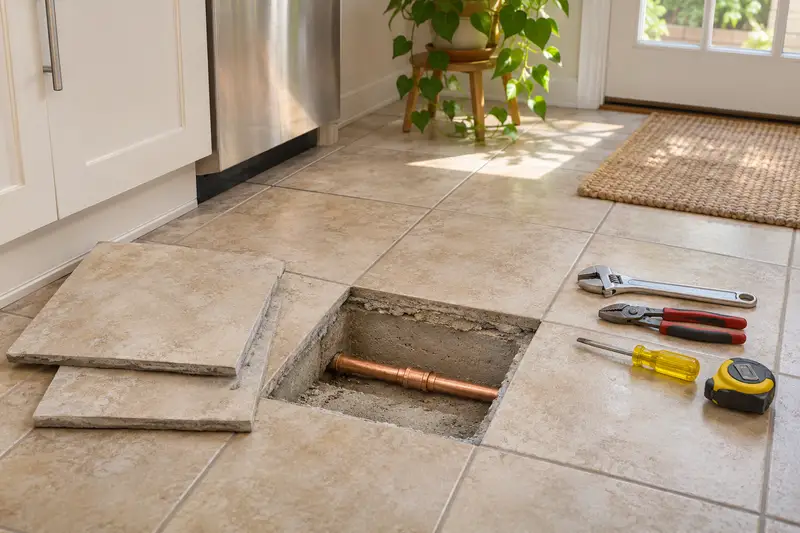
A lot of houses sit on a concrete slab, with the water pipes inside or beneath it. When one of those pipes leaks, the water soaks into the ground below instead of onto the floor, so the signs are easy to miss.
A hot water pipe leaking beneath the slab often heats the floor above it and keeps the water heater running. A cold water pipe leak gives fewer signs, often nothing more than a water meter that never stops.
Why small leaks cause big damage
A leak you can barely see can damage framing, flooring and insulation over a few months.
Slow leaks rarely stay slow. Mold starts to grow, wood softens, wood floors warp and ceilings stain, and the repair gets bigger every month. A damp spot that never dries is being fed by a leak somewhere.
How to catch water leaks early
- Write down your water meter reading on the first of each month and compare the numbers.
- Every few months, check under the sinks and behind the toilets.
- Put food coloring in each toilet tank from time to time. If the bowl changes color without a flush, the flapper is leaking.
- Place a few battery water alarms on the floor in likely spots, such as the water heater closet and the laundry room.
- Walk around the yard after the sprinklers run and look for spots that stay soggy.
Water leaks outside the house
Buried water lines, outdoor faucets and sprinkler pipes can leak straight into the soil, where nobody sees it. Watch for a patch of lawn that stays wet or unusually green, water collecting in the meter box and lower water pressure at every faucet.
Check outdoor faucets after a cold snap. One that cracked inside the wall may only leak while a hose is running, so run each one for a minute and look behind it. Our page on water line repair covers the buried water line in detail.
Leak detection questions
Is there a simple test for a hidden leak?
With all the water in the house turned off, keep an eye on the small leak indicator on the meter. Any movement means water is leaking somewhere.
What is a slab leak?
A water pipe leaking under the concrete floor of the house. Common signs are a warm patch of floor, a hiss of running water and a water meter that keeps turning.
Can a leak be found without opening walls?
Usually, yes. Pressure testing, listening equipment and thermal imaging narrow down the location before anything is opened.
Why has my water use gone up?
A running toilet, a dripping faucet, a sprinkler leak or a hidden pipe leak are the usual causes. The water meter check shows whether water is being lost.
Should I worry about a small leak under the sink?
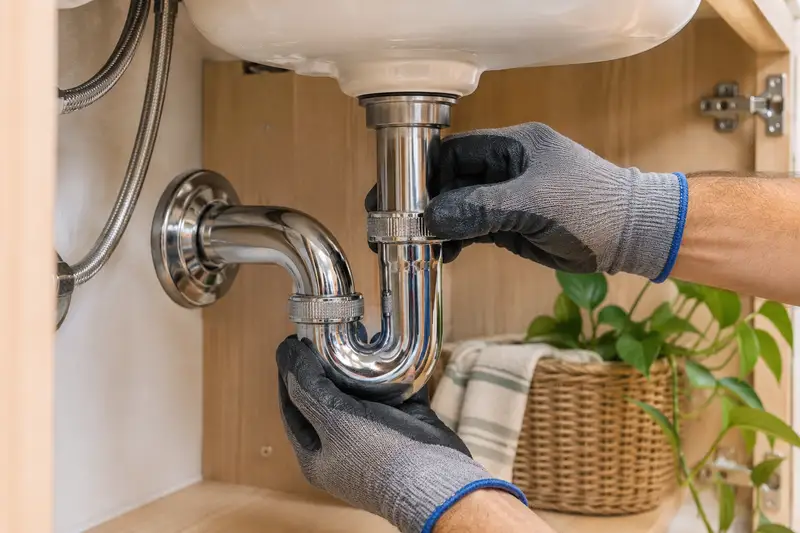
Yes, because the cabinet floor soaks up the water and mildew follows. Close that shutoff valve and have it repaired.
Can a water leak be in the yard?
Yes. The buried water line from the meter and the sprinkler pipes can both leak into the soil.
Will leak detection damage my floors?
Not if it is done properly. The leak is located first, and only a small access hole is opened where the pipe actually failed.
How long does finding a hidden leak usually take?
Often one visit. Pipes under a slab and long pipe runs take more time, because each line has to be closed off and tested.
Is every leak a big repair?
No. Many leaks come down to one fitting, a supply hose or a toilet flapper.
How can I prepare for a leak detection visit?
Write down the water meter reading each morning, use water only when you need it and mark any warm or damp spot with tape so it is easy to show the plumber.
Can a leaking toilet make the water meter move?
Yes. A flapper that lets water into the bowl can keep the meter moving, so do the dye test on your toilets before assuming a pipe is leaking.
Can a thermal camera see inside a wall?
Not directly. It reads the temperature of the surface, and damp areas often show up cooler or warmer than the dry wall around them.
Is a small rise in water use worth checking?
Often, yes. A small rise can be the first sign of a buried leak that will get bigger. The two minute meter check tells you whether it needs a closer look.
Other leak and burst pipe repairs
- Emergency PlumbingPlumbing problems that cannot wait
- Burst Pipe RepairCracked and frozen water pipes
- Water Line RepairThe buried pipe from the meter to the house
- All plumbing repairsEvery repair we handle, grouped by problem
Homeowners anywhere in the city can contact us for leak detection in Lubbock, TX. Tell us what your water meter is doing and a licensed plumber can come out.