Water Softener and Filtration in Lubbock, TX
If your water leaves crust on faucets or your water softener in Lubbock has stopped working, we can send a local plumber to help.
What a water softener actually does
Softening and filtering are not the same job
A water softener removes the calcium and magnesium that make water hard. In Lubbock homes with hard water, those minerals leave white crust on faucets and shower heads, spots on glasses and scale inside water heaters and fixtures.
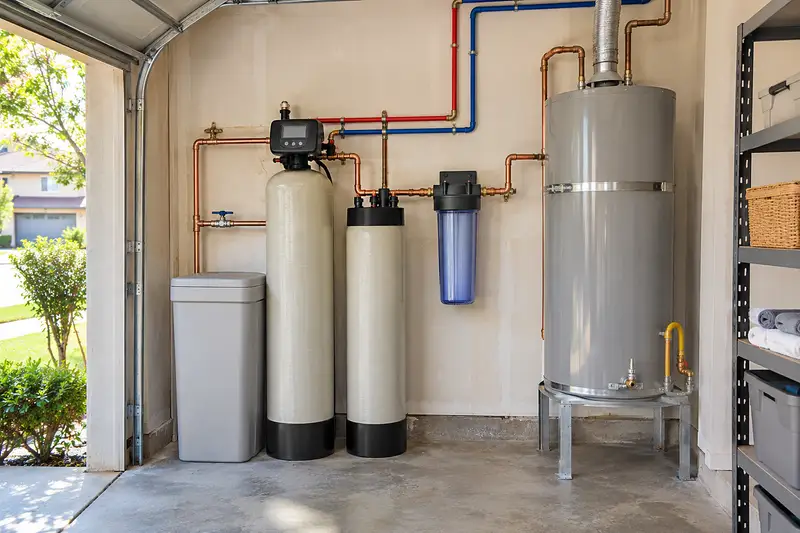
A water filter does a different job. It removes sediment, a chlorine taste or other things you may not want in your water. Many homes have a softener, a filter or both, installed on the main water line where it enters the house.
Signs your water or your softener needs attention
White crust on fixtures
Mineral buildup on faucets, shower heads and the toilet rim.
Spotted dishes
Glasses come out of the dishwasher cloudy or spotted.
Soap that will not lather
Hard water makes it harder for soap and shampoo to lather.
Salt that never goes down
The softener may not be regenerating, or salt has formed a bridge.
Salty or strange tasting water
A setting may be wrong or a valve may be faulty.
Low water pressure after the softener
A clogged filter cartridge or resin bed can restrict the flow.
Simple water softener checks you can do yourself
Salt level
The brine tank should be at least a quarter full of salt.
Salt bridge
A hard crust across the salt can stop it from dissolving. Break it up gently with a broom handle.
Clock and settings
After a power outage, the timer may need to be reset.
Bypass valve
Make sure the bypass valve is set for normal use, not bypass.
If those look fine and the water is still hard, the control valve or the resin may need servicing. A plumber can test the water before and after the softener to see whether it is doing its job.
Installing a water softener or a whole house filter
A water softener in Lubbock is usually installed on the main water line, close to where the water enters the house and before the water heater. A proper installation includes a few details that make maintenance easier later.
Bypass valve
Lets the system be serviced without turning off the water to the house.
Drain line
Carries the rinse water from each regeneration to a proper drain.
The right order
The filter, softener and water heater are connected in the right sequence.
Pressure check
Confirms good water pressure throughout the house after installation.
The options for your home, and what each one changes, are explained before anything is installed.
How softer water protects the rest of your plumbing
Hard water minerals do more than spot glasses. They build up in water heaters, where they settle as sediment and make the tank rumble, and inside tankless water heaters, where they slow down heating. They also clog faucet aerators and shower heads until the flow drops.
Softer water and regular flushing slow that buildup down. Our page on water heater repair covers sediment and flushing in more detail.
Repair or replace a water softener in Lubbock?
A repair usually works for
- Wrong settings or a timer that has reset.
- A stuck or leaking control valve.
- A clogged filter or a salt bridge.
A replacement is worth considering for
- A cracked resin tank or brine tank.
- An old unit whose parts are hard to find.
- A system that no longer suits the household.
How to look after a water softener
- Check the salt level in the brine tank once a month.
- Break up any hard salt crust gently with a broom handle.
- Reset the timer after a power outage if the display is blinking.
- Replace filter cartridges on the schedule printed on the housing.
- Check around the tanks and the drain line for drips from time to time.
Keep the manual or a photo of the model label handy. It tells the plumber which parts and settings the system uses.
Choosing a whole house water filter
Whole house filters come in several kinds. Sediment filters catch sand and grit, carbon filters reduce chlorine taste and smell, and some systems combine stages. The right choice depends on what you want to change about your water.
A simple water test is a good first step. It shows what is in the water, so the filter or softener you choose matches what your house actually needs.
Water softener and filter questions
What is the difference between a softener and a filter?
A softener removes the minerals that make water hard. A filter catches sediment, taste or other things you may not want in the water.
How do I know if my water is hard?
White crust on faucets, spotted glasses and soap that will not lather are common signs. A simple test kit gives a number.
How often does a softener need salt?
It depends on the system and how much water the household uses. Check the brine tank monthly and keep it at least a quarter full.
Why is my water softener not working?
Low salt, a salt bridge, a timer that reset after a power outage or a bypass valve left on bypass are the common reasons.
Can a softener lower water pressure?
A clogged filter or an undersized or failing system can restrict flow. A plumber can check it.
Does a water softener protect the water heater?
Softer water slows the buildup of scale and sediment inside the water heater, which helps it run more efficiently.
Where is a water softener installed?
On the main water line, usually close to where the water enters the house and before the water heater.
What is a bypass valve?
A valve that sends water around the softener, so the softener can be serviced without turning off the water to the house.
Can a plumber service an existing system?
Yes. A plumber can repair valves, replace filters, fix leaks and check the connections.
Can I drink softened water?
Many households do. If you prefer, a separate drinking water filter at the kitchen sink is a common addition.
Does a filter need maintenance?
Yes. Cartridges clog over time and need replacing on schedule, or water pressure drops.
Why is my softener using so much salt?
A setting that regenerates too often, a leaking valve or a change in household water use can all raise salt use. A plumber can check the settings.
Can a softener be moved?
Usually yes, if there is a suitable spot on the main line with a drain nearby. The plumber can explain what the move would involve.
Do softeners need a drain?
Yes. The rinse water from each regeneration has to go to a proper drain, which is part of planning where the system sits.
Other toilet, faucet and hard water repairs
- Toilet RepairRunning, clogged or leaking toilets
- Faucet and Fixture RepairDripping faucets, showers and damp cabinets
- All plumbing repairsEvery repair we handle, grouped by problem
If you are thinking about a water softener in Lubbock, or yours has stopped working, contact us and tell us what you see on your fixtures.